Personal branding examples, from real experts.
Ten people who became known for one idea: a baseball team owner, a former executive assistant, executives, founders and speakers. For each, what they are known for, the move that built it, the result in their own published story and the part you can copy. Then the patterns they share.
What a good example shows
Most lists of personal branding examples are celebrities. Their brands are real, but their situation is not yours. The people below are consultants, executives, founders and specialists, and each one became known for a specific idea in a specific field. For each, look at four things:
- Known for: the idea or audience people connect with their name.
- The body of work: what explains the idea when they are not in the room, usually a book plus talks or writing.
- The channel: where they show up regularly.
- The proof: what other people did because of it.
Every result below comes from the person's story on scribemedia.com, linked in each example. These are strong results from individual people, not typical ones.
The ten examples
1. Patti Temple Rocks: the voice against ageism at work
Known for: ending age discrimination in the workplace. The move: after being pushed out of a job she loved, she wrote about what happened on LinkedIn. Her story says thousands of people started contacting her almost immediately. She then wrote I'm Not Done. The result: her story says her LinkedIn following more than quadrupled, outlets including The Wall Street Journal and Forbes featured her work, and she built a full-time speaking and consulting business (read her story). Copy this: she named a problem many people felt and nobody was owning.
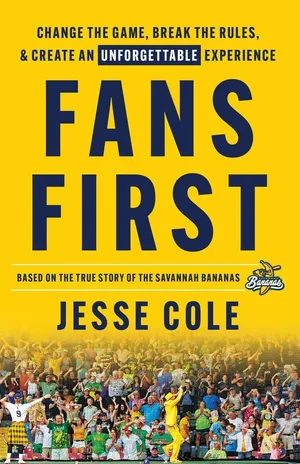
2. Jesse Cole: the Fans First owner
Known for: turning a struggling minor-league baseball team into a national sensation by putting fans first. The move: his story says he used a book to turn that story into a brand, a message and a speaking career. Before the book, he had spoken for free anywhere for ten years. The result: a 500% increase in paid speaking opportunities. In his words: "I'm now in a position where I can decline speeches if it's not a group that I feel like I can make an impact on." (read his story) Copy this: the brand is a philosophy with a name, and the business itself is the proof.
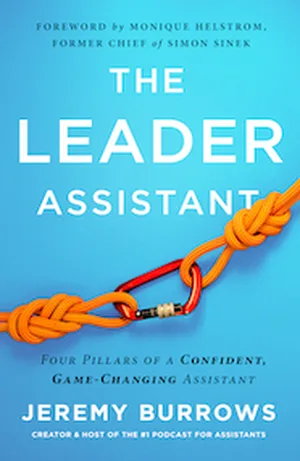
3. Jeremy Burrows: the voice of the executive assistant
Known for: executive assistants, the profession he worked in himself. The move: his story says he started blogging to help other assistants while between jobs, then found himself having the same conversations with group after group, so he wrote The Leader Assistant. The result: his story says his speaking fees jumped 5 to 10 times higher, with corporate trainings and speaking gigs following. His advice: "If you feel like you're having the same great conversation 50 times, that's a telltale sign you should write a book." (read his story) Copy this: a clearly defined audience is easier to own than a broad topic.
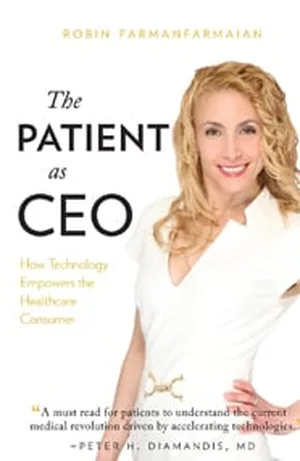
4. Robin Farmanfarmaian: Robin Inc.
Known for: The Patient as CEO and, in her story's words, companies changing the face of medicine. The move: she planned her brand like a business, which her story calls Robin Inc., starting with speaking. Before launch she set up a Forbes profile, gathered every business card she had ever received and built a media list. The result: more than 225 keynotes in 16 countries, and VP and advisory roles at health technology companies. "It's now a year and a half later and I'm still doing a podcast a week," she says in her story (read her story). Copy this: treat the brand as a project with a plan, not a side effect.
5. Cameron Herold: the vivid vision
Known for: company culture and the "vivid vision," a written description of where a company is going that his story says he set out to use in place of the mission statement. The move: a series of books on one theme, and a habit of putting a book in every audience member's hands. "Every single time I've spoken for the last seven or eight years, everyone gets one of my books." The result: his story says his speaking fee rose from $15,000 to $30,000 after these books, and speaker bureaus that had ignored him started asking to represent him (read his story). Copy this: give your idea a name people can repeat.
6. Ron Thurston: the retail leader's advocate
Known for: the people who work on the front lines of retail. The move: after more than thirty years leading retail teams, he wrote two books for them, posts on LinkedIn every day and took his book on the road in an Airstream. The result: his story describes a keynote where 700 store managers held up his book, and a book tour backed by three brand sponsors (read his story). Copy this: show up in the same place, for the same people, every day.
7. Cliff Lerner: the entrepreneur who shares his mistakes
Known for: honest lessons from building one of the early online dating companies, including the expensive mistakes. The move: his story says he first wrote the book as a series of tips, found it dry, then rewrote it around the failures he was most afraid to tell. The result: about ten LinkedIn requests a week to advise companies or join boards, and companies recruiting him to their boards (read his story). Copy this: your failures can be more credible than your wins.
8. Neil Thanedar: the Y Combinator for politics
Known for: a political accelerator modelled on the startup accelerator he went through himself. The move: he wrote Positive Politics about 1,000 words a week, so that the idea had a book behind it. In his story he describes people asking him to explain the idea, and his answer being that there is a book. The result: three of the five founders in his first class found him through his writing (read his story). Copy this: pair your work with a familiar comparison people instantly understand.
9. Steve Susi: the four currencies
Known for: a framework of four currencies that brands and customers trade: money, information, loyalty and time. The move: his story says the framework came from what he watched brands and customers trade during his years as Amazon's first executive creative director, and was tested in front of an audience in Tokyo before it became Brand Currency. The result: the book earned a Korean translation deal (read his story). Copy this: a simple framework travels further than a long list of advice.
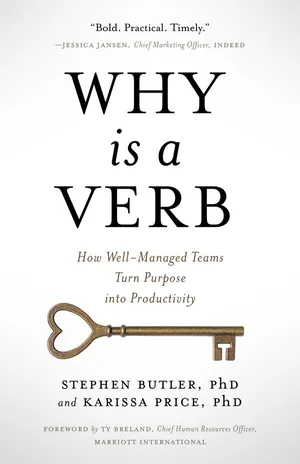
10. Stephen Butler: purpose as a verb
Known for: the idea that purpose is something you practice rather than a statement you write once. The move: with coauthor Karissa Price, he wrote Why Is a Verb to build a platform rather than to sell copies, and gave talks on it wherever they could. The result: his story says the book brought a foreword from Marriott's chief human resources officer, a TEDx talk with about 30,000 views and a role as head of AI, after a founder who read the book heard one of the talks (read his story). Copy this: the brand can open a door you did not plan for.