Your one-line promise: the sentence people repeat.
Your positioning statement is for you. The promise is for everyone else: the sentence a reader would use to recommend you to a friend. Here is how to write it, six patterns that work, and how to test it before it goes on your cover.
The job of the promise
The Scribe Method asks every author for a "cocktail party pitch": the one sentence a reader would naturally use to recommend the book to someone else at a party. Its example from the book Grain Brain is a good one. The weak version: "It's a scientific analysis of health problems caused by grains." The strong version: "It explains why bread is bad for you and what to eat instead." (read the chapter)
The strong version wins for three reasons. It is in plain words. It names something the listener already cares about (bread, and what to eat). And it promises a change: you will know what to eat instead. Your one-line promise is the same sentence, about you rather than one book. It has one job: let a person who likes your work pass you on accurately in under ten seconds.
The rule: if a reader could not say your promise to a friend without sounding like they are reading an ad, rewrite it until they could.
From positioning to promise
If you have written a positioning statement, the promise is already inside it. Take the reader, the problem and the result, and drop everything else: the competitors, the proof, the method details.
Positioning statement: "For first-time sales managers promoted from the sales floor who are watching their old team miss quota, I help them get the team back on number through the Monday Pipeline Hour. Unlike a generic leadership course, my approach teaches the one meeting a new manager runs every week, because I ran a 40-person sales floor for nine years."
Promise: "How to get your old team back on quota after you become their manager."
As a friend would say it: "Read her stuff. She shows you how to run your old team without losing them."
That third line is the real target. You cannot control it, but you can write a promise that makes it easy.
Six patterns
Most strong promises fit one of these shapes. Try writing yours in at least three of them, then pick the one a stranger understands fastest.
| Pattern | Shape | Hypothetical example |
|---|---|---|
| 1. Result without the pain | [Result] without [the thing they dread] | Build savings without a budget spreadsheet. |
| 2. Reader plus result | How [reader] can [result] | How new nurse managers can keep their best people. |
| 3. The why and the fix | Why [problem happens] and what to do instead | Why your plant is always a week late, and how to fix it. |
| 4. The reversal | [Common belief] is wrong; [better approach] | More meetings will not fix your culture. Better rituals will. |
| 5. The name plus the outcome | [Named method] for [result] | The Late Order Audit: five questions that find why orders slip. |
| 6. The identity | For [people who see themselves a certain way] | For founders who want to stay the boss of a company they still like. |
Patterns 1 and 2 are the safest and work for almost everyone. Pattern 4 is powerful when you really do disagree with your field, and weak when the "common belief" is a straw man. Pattern 5 only works once the name is known, so most authors use it on the book cover alongside a pattern 1 or 2 subtitle. Pattern 6 suits authors whose readers share a strong identity, such as veterans, founders or physicians.
The title chapter of The Scribe Method lists more title strategies (make a promise of a benefit, target an audience, offer a specific solution, use numbers) and most of them apply to a personal promise too.
Before and after rewrites
All examples below are hypothetical. The "before" lines are typical first drafts.
| Before | Why it fails | After |
|---|---|---|
| Empowering leaders to unlock their full potential. | No reader, no problem, no change you can picture. | Helping first-time managers stop doing their team's work for them. |
| Transformative strategies for holistic wellness. | Three abstract words in a row. | A twelve-week plan for adults told they are pre-diabetic. |
| The ultimate guide to scaling your business. | Every business book could say this. | How to keep your culture when you go from 20 people to 100. |
| Insights from 30 years in commercial real estate. | About the author, not the reader. | How small landlords can fill vacancies without dropping the rent. |
| Get rich fast with my proven system. | Promises speed and money; readers have learned to distrust both. | A plain-English plan for your first rental property. |
How promises go wrong
- Vague verbs. "Empower," "transform," "elevate" and "unlock" describe a feeling, not a change. Ask: what will the reader do differently on Monday?
- Your jargon, not theirs. "Stakeholder alignment" is how a consultant describes it. "Getting your leadership team to agree" is how the reader does.
- Promising the clock or the money. Readers distrust "in 30 days" and "six figures," and you cannot control either. Promise what your method is built to change.
- Too many results. "Grow revenue, build culture and find balance" is three promises. Pick the one the reader would pay for first.
- Clever but cold. A pun only works if a stranger gets it at once. If you have to explain it, it is a title, not a promise.
Test it on real people
The promise lives or dies on whether other people can use it, so test it on them, not on yourself.
The stranger test
Show three candidate promises to five people who fit your reader but do not know you. Ask: "Which of these would you want to read, and why?" and "What do you think this person does?" If their answer to the second question is wrong, the promise is unclear.
The retell test
A day later, ask the same people to tell you what the person does. Whatever words come back are your real promise. Steal them.
The client test
Ask two or three past clients: "When you recommend me, what do you say?" Clients often state your promise better than you do, because they describe the result, not the process.
The Scribe Method adds one warning that applies here: do not rely on social media polls of friends, because your friends are not your audience.
Promises from Scribe authors
Real authors, linked to their stories. These results are strong, not typical, and nobody can promise them.
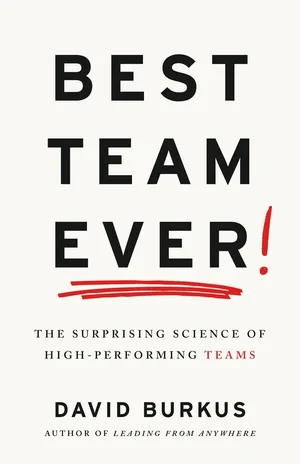
- David Burkus chose a title a manager understands instantly, Best Team Ever, because event planners think in the specific problem they need solved. His rule: "a caveman should be able to read the title of your book and know exactly what it's about."
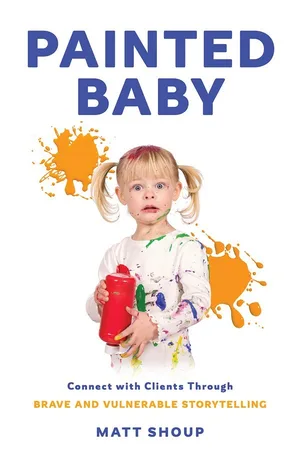
- Matt Shoup built Painted Baby on one premise, that painting a picture of perfection prevents true connection. The phrase became shared language with his painting company's customers, who now talk about "a little painted baby situation" when a job goes wrong.
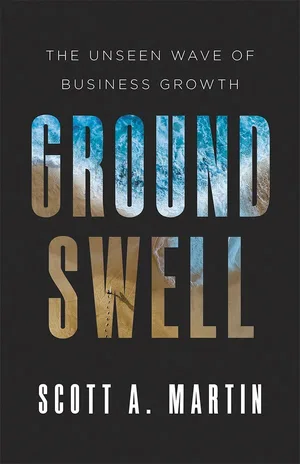
- Scott A. Martin wrote Groundswell around one problem: how to market without marketing. His closing advice to authors could be a promise in itself: "Don't try to reach more people. Resonate with more people."
- Stephen Butler learned from Scribe's editors that the subtitle is the real title. Theirs, How Well-Managed Teams Turn Purpose into Productivity, is a promise in pattern 2. (read his story)
Where the promise goes
Once it passes the tests, use the same words, not similar words, in each of these places:
- Book subtitle, or the first line of the back cover copy
- Website headline
- LinkedIn headline (with your reader in front)
- The second sentence of your bio
- The opening minute of every talk
- Your email signature, if you use a line there
The consistency checklist walks through each place. If you want to see the promise inside a finished bio, enter it in the bio builder as your result.
Sources: The Scribe Method, Figure out your book idea; The Scribe Method, Picking the perfect book title; author details and quotes from the linked Scribe success stories.