Thought leadership is an idea people can disagree with.
For an expert with a book, thought leadership is being known for one specific point of view. Here is what that means in practice, real examples from Scribe authors who own an idea, a one-year strategy built around the book, and how to tell the real thing from a busy content calendar.
What thought leadership actually is
The phrase gets used for almost anything an expert publishes: a LinkedIn post, a webinar, a white paper with a logo on it. That use makes it meaningless. A more useful definition, and the one this guide uses, is this:
Thought leadership is a named point of view on a problem in your field, stated clearly enough that people can repeat it and specifically enough that some of them will disagree.
Each part of that sentence does work. Named, because people cannot ask for, search for or credit an idea that has no handle (the naming guide covers how). Point of view, because a summary of best practice is useful but belongs to everyone. On a problem, because ideas travel when they help someone with something they face this year. Some will disagree, because a statement nobody could argue with, such as "culture matters" or "customers come first," tells the listener nothing new.
The disagreement test is the simplest check. Write your main idea in one sentence and ask who would object. If the honest answer is "nobody," you have a topic, not a point of view.
The Scribe Method notes that publishing a book "positions you among other thought leaders" (read the chapter). The book is the container. What goes in it still has to be an idea worth leading with.
Thought leadership examples from Scribe authors
Each author below wrote a book around one idea of their own. The details come from their Scribe success stories, which are linked. The results are strong ones, not typical, and nobody can promise them.
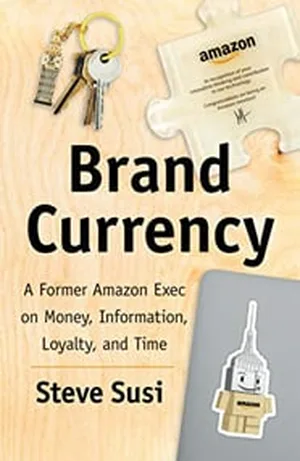

Steve Susi: the four currencies
The idea: brands and customers trade in four currencies, money, information, loyalty and time, and the brand that masters all four at once wins. What makes it arguable: it treats money as one currency among four, which is a different way of keeping score than most marketing reports use.
Susi was Amazon's first executive creative director. He tested the idea on a packed room at Dentsu's Tokyo headquarters, working through about 30 translators, and took the standing ovation as proof it travelled. Brand Currency set out the framework in 2019, earned a Korean translation, and the framework still anchors his work and his second book. He has kept extending the point of view in public too: his article "Taste is the New Oil" argues that when everyone has the same intelligence, the edge is the judgment you bring to it. (Read his story)
Dr. Valerie Rein: Patriarchy Stress Disorder
The idea: the trauma symptoms she saw in every one of her female clients come from intergenerational collective trauma, which she named Patriarchy Stress Disorder. What makes it arguable: it is a new diagnosis, which means some people will question it, and that is exactly why it gets discussed.
The book established her as the expert who described it. Her story reports more than 100 podcast appearances, features on NBC and ABC, a featured speaker slot at the SHE Summit, and interviews for articles about the idea in Good Housekeeping and Psychology Today. The clearest sign of thought leadership is in her trainings: when she asks who came because another woman mentioned the book, every hand goes up. (Read her story)
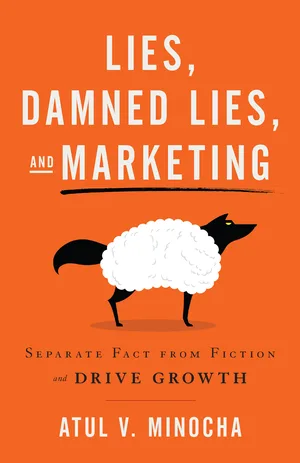
Atul Minocha: fake ROI
The idea: demanding a hard return on every marketing dollar quietly pushes good marketers into inventing numbers; strategy and positioning ("big-M marketing") should come before the tactics most companies rush into. What makes it arguable: it goes straight at a rule many CEOs and finance teams hold dear.
Minocha, a partner at the fractional-CMO firm Chief Outsiders, wrote Lies, Damned Lies, and Marketing to set the record straight. He expected the book to pay for itself in three to five years; it recovered its roughly $60,000 cost in six months, and Forbes and Inc named it among the top business books of 2021. His own summary of what matters now that content can be automated: "quality always trumps quantity." (Read his story)
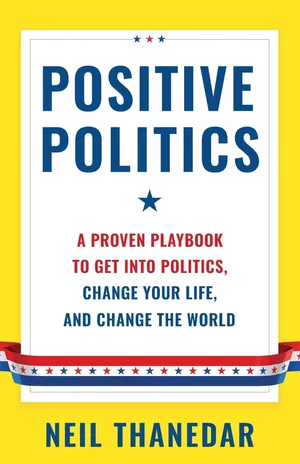
Neil Thanedar: positive politics
The idea: there should be a Y Combinator for politics, an accelerator for people who want to pass a specific bill without ever running for office. What makes it arguable: it says elections are not the only door, which runs against how most people think about political change.
Thanedar had more than 100,000 words of public writing, with the idea buried as one solution among many. He wrote Positive Politics to give it its own container: "I think the books are a way to own an idea." Three of the five founders in his accelerator's first class found him through his writing, and the book now answers the question his program alone kept raising: what is positive politics? (Read his story)
Two more worth studying
- Julie Newman, Pull, Don't Push. Her point of view is that girls-in-STEM events push too hard, when engineering is attractive enough that explaining it is enough. She was afraid to tell educators they were doing something wrong; the most common response turned out to be some version of "this is all so obvious now that you just wrote it." The book opened stages including the National Science Teachers Association national conference. (Read her story)
- Scott A. Martin, Groundswell. He set out to answer what he called an unsolvable problem, how to market without marketing, and named the answer Groundswell. His company, podcast and framework share the name, and a reader of the book handed him a TEDx slot. (Read his story)
What the examples have in common
| Author | One idea | Kind of idea | Where people meet it |
|---|---|---|---|
| Steve Susi | Four currencies | A model | Book, talks, articles, book two |
| Dr. Valerie Rein | Patriarchy Stress Disorder | A diagnosis | Book, podcasts, TV, trainings |
| Atul Minocha | Fake ROI | A critique | Book, client work with CEOs |
| Neil Thanedar | Positive politics | A movement with a program | Book, public writing, the accelerator |
| Julie Newman | Pull, don't push | A correction to common practice | Book, education and industry conferences |
Three things repeat. Each author has one idea, not a list of opinions. Each idea came from years of work, not from a content plan: Rein saw it in her clients, Susi watched it at Amazon, Newman had spoken at more than 50 events before she wrote a word. And each idea is carried by the book, so that a listener who hears it on a podcast or in a talk has somewhere to go for the whole argument.
Thought leadership or content volume?
Most "thought leadership strategy" advice is really advice about publishing more often. Volume can help an idea spread, but it cannot create one. Matthew Ray Scott, coauthor of Physician Brand Rx, puts the distinction well for his readers: "physicians don't need to be louder to stand out. Instead, they need to be clear about the problem they solve." (Read his story)
| Question | Content volume | Thought leadership |
|---|---|---|
| What is it measured by? | Posts, views, followers | Whether people repeat, use or argue with your idea |
| How many ideas? | A new topic each week | One idea, approached from many angles |
| Could someone else have written it? | Often, yes | No; it carries your name and your evidence |
| What happens if you stop for a month? | The audience drifts | The book keeps making the argument |
| How do people refer you? | "She posts a lot about leadership" | "She's the one who came up with the Handover File" |
A simple audit: look at your last ten pieces of public work. Count how many make the same central argument. If the answer is two or fewer, you are producing content. If it is seven or more, each from a different angle, you are building a point of view.
A one-year strategy built around the book
This plan assumes the book is written or nearly written. It does one thing for twelve months: takes a single signature idea into the places your readers already listen, and sends them back to the book for the full argument.
Months 1 to 2: settle the signature idea
Write the idea in one sentence that passes the disagreement test, and give it a name. Pair it with your personal brand statement so people know both who you help and what you believe. Then test it out loud before you commit. Paul Zak, author of Immersion, describes doing exactly this: "you can stress test your ideas by putting them out there on a podcast or on a stage or in a blog or whatever, in an interview and then kind of see if it resonates or not." (Author Hour episode)
Months 2 to 4: write the argument article
One long article that makes the case in full, the version you would send to a skeptic. Offer it to a trade publication or newspaper as an opinion piece. Michael J. Boydell's op-ed in a national newspaper put a name to the concept that became the central posture of The Adventure Advantage. (Read his story)
Months 3 to 12: podcast conversations
Pitch shows your readers listen to, and lead with the book, because it hands the host a ready-made conversation. Kristin Birdwell, who hosts her own show, says so from the other side of the table: "if I receive a pitch with someone that has published a book, I love this because it automatically gives me a conversation frame or direction." (Author Hour episode) Make the same argument on every show, with a different story each time.
Months 4 to 12: talks
Build one signature talk on the idea, with one section per part of your method. The speaking topics guide shows how to turn chapters into talk titles an event planner will book. Start with the rooms you can already get into: client events, industry associations, your own network.
Every month: one short piece from a new angle
A post, a newsletter, a short video. Each one applies the same idea to something current: a news story, a client question, an objection you heard on a podcast. One idea, many angles.
Month 12: review what came back
Write down the words people used when they introduced you, quoted you or argued with you. Those are your idea as the world hears it. Sharpen the idea where people misunderstood it. Do not replace it with a new one.
Update your bio as the year goes on so it names the idea and the book in its second sentence. Hosts and event planners read the bio aloud, which makes it the most-repeated piece of your thought leadership.
A worked example
Say you advise family businesses on succession. Your book argues that most handovers fail because the founder's decisions were never written down, and it names the fix the Handover File.
The arguable sentence: "Succession plans fail because of what the founder never wrote down, not because the heir is unready." Some estate planners will disagree, which is the point.
The year: an argument article for a family business trade magazine in month three; two podcast conversations a month from month three, each on a different handover story; a 40-minute talk, "Why your successor is guessing," pitched to family business associations from month four; a short monthly newsletter applying the Handover File to one reader question.
The review: by month twelve, clients introduce you as "the Handover File person," and one association has asked for a workshop. Year two is the same idea, deeper.
Notice what the plan leaves out: new topics, trend commentary and opinions on everything in your field. Those make a feed busier. They do not make you known for anything.
Sources: The Scribe Method, What's the intangible impact of a book; The Scribe Method, How writing a book can build your brand; author details and quotes from the linked Scribe success stories and Author Hour episodes.