Name your idea so people can ask for it.
An idea without a name gets described, paraphrased and forgotten. An idea with a name gets repeated, searched and credited to you. Here is when to name your method, how to choose the name, and what Scribe authors did with theirs.
Why a name matters
Think about how ideas travel. A client tells a colleague about you. If your method has no name, the colleague hears "she has this process for figuring out why orders are late, I don't remember exactly." If it has a name, the colleague hears "she has the Late Order Audit," and can type that into a search bar tonight. The name is the handle other people use to carry your idea.
A name also changes how your own work is perceived. A list of good advice looks like opinion. The same advice with a name, a fixed number of steps and a clear outcome looks like a method someone has used many times. That is not a trick: if you have used it many times, the name just makes that visible.
The Scribe Method lists "coin a new word or phrase" as one of its title strategies, noting that when it works it "can create a powerful brand." (read the chapter) It is also the hardest to pull off, which is why this guide covers the easier options first.
Do you have something worth naming?
Not every expert needs a named framework, and inventing one for the sake of it is easy to spot. Answer these honestly.
- Do you explain the same idea, in roughly the same order, to most new clients?
- Do clients already have a shorthand for it ("the Friday thing," "your three buckets")?
- Could you draw it on a whiteboard in under a minute?
- Does it produce a result you can describe, not just a feeling?
- Is it at least partly different from what others in your field teach?
Three or more yeses means there is a real idea waiting for a name. Fewer than three usually means the idea is still forming. That is fine; write the book's positioning first and the name often shows up during the writing.
Jeremy Burrows, author of The Leader Assistant, described the signal well in his story: having the same great conversation fifty times is a telltale sign you should write a book. The same conversation, repeated, is also a sign it deserves a name.
What to name: diagnosis, method or principle
There are three kinds of idea an expert can own, and they need different kinds of names.
| Kind | What it does | Example from a Scribe author |
|---|---|---|
| A diagnosis | Names a problem people have but could not describe | Patriarchy Stress Disorder, from Dr. Valerie Rein |
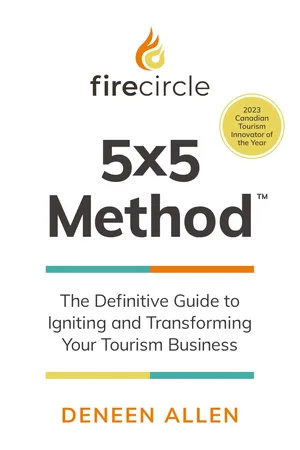
| A method | Names the steps that solve a problem | The Firecircle 5x5 Method, five steps and 25 workshops, from Deneen Allen |
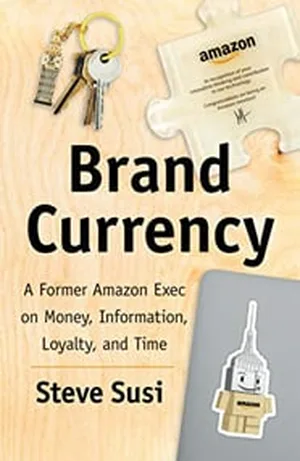
| A principle or model | Names a way of seeing a field | The four currencies (money, information, loyalty and time), from Steve Susi |
A diagnosis is the most powerful, because once people have a word for their problem they look for the person who named it. It is also the riskiest, because it has to be accurate. A method is the most practical and the easiest to sell as a workshop. A principle works best for authors who speak and advise more than they deliver step-by-step work.
Naming patterns that work
| Pattern | How it works | Hypothetical example |
|---|---|---|
| Number plus noun | Says how many parts there are; easy to remember and teach | The Three-Account System |
| Plain label | Says exactly what it is; no explanation needed | The Late Order Audit |
| Metaphor | Borrows an image people already understand | The Shop Floor Compass |
| Timing or ritual | Names when it happens, which makes it a habit | The Monday Pipeline Hour |
| Your name or company | Ties the idea to you; works once you are known | The [Company] Way |
| Coined term | A new word or phrase for something new | "Handover debt" for unwritten knowledge a retiring owner holds |
Gui Costin's first Scribe book, The Dakota Way, uses the company-name pattern, and his story describes his "Dakotaisms," short phrases such as "throw your hat over the wall" that his team uses to get past their own mental barriers. Phrases like that are named ideas too, small enough to repeat in a meeting.
A naming workshop you can do alone
Write the idea in one sentence
What it is, who it is for, what it produces. If you cannot, stop here and go back to the positioning statement.
Collect the words clients already use
Look through emails, call notes and testimonials for the words clients use to describe your process. Their words are often better than yours.
Draft twenty names
At least three from each pattern in the table. Do not judge yet. Volume first.
Cut to five
Remove anything you would be embarrassed to say on stage, anything that needs explaining, and anything that sounds like a competitor.
Say each one in a sentence
"I'd start with the ___." "We ran the ___ last quarter." Names that sound natural in a sentence are names people will use.
Test with five people from your audience
Ask what they think each name means before you explain it. Keep the one they guess closest.
Say you advise family businesses on handing over to the next generation. Your one-sentence idea: "Before a founder steps back, they write down the decisions only they know how to make, so the successor is not guessing." Clients call it "the brain dump." Your twenty drafts include The Handover File, The Founder's Ledger, The Five Decisions, Handover Debt and The Brain Dump. Testing shows people guess "The Handover File" correctly almost every time, while "Handover Debt" makes them curious but they guess wrong. You keep The Handover File as the method and use "handover debt" as the problem it fixes, a diagnosis and a method that point at each other.
Checks before you commit
- Search it. Search the name in quotes, on Amazon books and on LinkedIn. If someone in your field already uses it, pick another.
- Check trademarks. The Scribe Method notes that titles cannot be copyrighted but can be trademarked. Search the USPTO trademark search before you print a name on a cover or sell a workshop under it, and ask a trademark attorney if a business will depend on it.
- Say it out loud. On a podcast, nobody sees the spelling. If it is hard to say or easy to mishear, it will not travel.
- Check the domain and handles. You do not need them, but you should know who has them.
- Imagine it in five years. Avoid names tied to a trend or a year unless the idea is too.
Scribe authors who own a term
Each card links to the full story. These results are strong, not typical, and nobody can promise them.

- Dr. Valerie Rein named a diagnosis. She saw symptoms of trauma in almost all her female clients and called the intergenerational collective trauma behind it Patriarchy Stress Disorder. The book made the term the title, established her as the expert who described it, and her story reports more than 100 podcast appearances and a business that grew from six figures to seven.
- Steve Susi named a model. Watching what brands and customers traded at Amazon, he framed it as four currencies: money, information, loyalty and time. Brand Currency laid out the framework, which his story says still anchors his work and his forthcoming second book.
- Scott A. Martin named a pattern, then a formula. He called brands that grow on their own a Groundswell, and built the formula build, give, grow, transform. His company, podcast and book share the name. (read his story)
- Deneen Allen named a method she had used for years. She first wrote down her 5x5 method in 2019; the book now works as the front door to her Firecircle community.
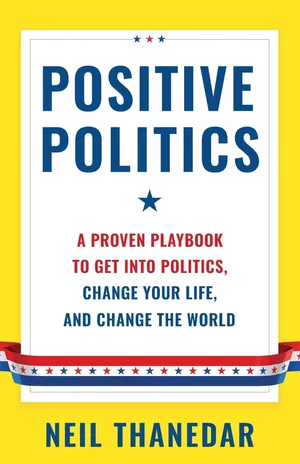
- Neil Thanedar wrote a book to own a phrase. "I think the books are a way to own an idea," he said of Positive Politics. When he described only his accelerator, people asked what positive politics was; now he can point to the book.
Using the name once you have it
- Put it in the book: a chapter title, a diagram, or the title itself.
- Use it as the backbone of your signature talk: one section per step.
- Mention it in your bio, once: "creator of The Handover File."
- Use the same capitalization and spelling every time. "The Handover File," never "the handover method" in one place and "Handover Framework" in another.
- Let clients use it. When a client says "we ran the Handover File," the name is working.
Sources: The Scribe Method, Picking the perfect book title; USPTO trademark search (checked October 20, 2026); author details and quotes from the linked Scribe success stories.