How to write a positioning statement as an author.
The positioning statement is the private sentence behind your whole brand: one reader, one problem, one result, and why you. Here is a template built for authors, worked examples, and the tests that show whether yours is ready.
What a positioning statement is
In marketing, a positioning statement is a short internal description of who a product is for, what it does for them and why it beats the alternatives. It is not meant to be read by customers. It is meant to be read by everyone who writes for, designs for or sells the product, so they all pull in the same direction.
For an author, the "product" is you and your ideas, and the people pulling in the same direction are mostly you: the you who writes chapters, the you who says yes or no to a podcast invitation, the you who writes the LinkedIn headline at 11 p.m. A good positioning statement settles arguments before they start. When you are unsure whether a chapter belongs in the book or a talk belongs on your list, you hold it up against the sentence.
The Scribe Method has an author-specific version of this called the North Star: "I will use my book to target [primary audience], by teaching them [book idea], which will lead to my ultimate goal of more [objectives]." The North Star is about what the book does for you. The positioning statement below adds the two pieces your brand needs on top: the reader's problem in their words, and why they should choose you.
The author template
Fill in each bracket. Do it in this order, because each blank narrows the next.
For [one specific reader] who [problem, in the words they would use], I help them [result they want] through [your method, named if you can]. Unlike [what they would do instead], my approach [the real difference, which you can prove], because [your evidence: experience, results, research].
One specific reader
A job title plus a situation is the usual sweet spot: "first-time sales managers promoted from the sales floor," not "leaders." The Scribe Method chapter on figuring out your audience puts it simply: write for one person.
The problem in their words
Write the problem the way the reader would type it into a search bar or say it to a friend. "My team stopped hitting quota after I took over" beats "suboptimal team performance."
The result they want
A change they can see. "Get the team back to quota without firing anyone" is a result. "Unlock potential" is not.
Your method
How you get them there. If it has a name, use it; if it does not, see how to name your idea.
What they would do instead
Your real competition is rarely another author. It is usually doing nothing, hiring a consultant, reading a generic book, or asking a peer. Name the honest alternative.
The difference, and the proof
One difference you can back up. "I have done this job" is a difference. "I am passionate" is not.
Positioning statement examples, before and after
All four people below are invented to show the pattern. The "before" versions are the kind of thing most experts write first.
Before: "I help organizations drive revenue growth through world-class sales training."
After: "For first-time sales managers promoted from the sales floor who are watching their old team miss quota, I help them get the team back on number through the Monday Pipeline Hour. Unlike sending them to a generic leadership course, my approach teaches the one meeting a new manager runs every week, because I ran a 40-person sales floor for nine years and learned it the hard way."
What changed: a reader with a situation, a result the reader can see, a named method, an honest alternative, a reason to believe.
Before: "Holistic wealth management for high-net-worth families."
After: "For physicians in their first ten years of practice who earn well but have nothing left at month end, I help them build savings without a budget spreadsheet through a three-account system. Unlike the advice they get from colleagues at the hospital, my approach was built around how physicians are actually paid, because I spent fifteen years planning for doctors before writing it down."
Before: "Sharing my journey and lessons on leadership, culture and life."
After: "For founders of companies between 20 and 100 people whose culture is slipping as they hire, I help them keep what made the company work through a written set of operating principles. Unlike hiring an HR consultancy, my approach is something the founder writes and owns, because I did it at my own company through three rounds of growth."
Before: "Dedicated to patient-centered care and wellness."
After: "For adults told they are 'pre-diabetic' and given a pamphlet, I help them bring their numbers back to normal through a twelve-week food and walking plan. Unlike crash diets, my approach is built to last after the twelve weeks, because it comes from the plan I have used with patients in my own clinic."
Notice that none of the "after" versions is clever. Positioning statements are not supposed to be. Clever comes later, in the promise and the name, and only if it stays clear.
Personal brand statement: the public version
People search for "personal brand statement" and "positioning statement" as if they were the same thing. They are related, but one is built from the other.
| Positioning statement | Personal brand statement | |
|---|---|---|
| Who reads it | You, your ghostwriter, your team | Everyone |
| Length | One long sentence, 30 to 60 words | One short sentence, about 10 to 20 words |
| Includes competitors | Yes | No |
| Where it goes | A note on your desk | LinkedIn headline, website hero, bio first line, speaker sheet |
To make the brand statement, keep the reader and the result and drop everything else. From Example 1 above:
"I help first-time sales managers get their old team back on quota."
A simple pattern that works for most experts: I help [reader] [get result] [without the thing they dread]. "I help physicians build savings without a budget spreadsheet." "I help founders keep their culture as they hire." Once you have it, the first line of your bio is the same sentence in the third person.
Five tests before you use it
- The exclusion test. Does it leave people out? If nobody could read it and think "that is not for me," it is too broad.
- The search test. Would your reader recognize the problem as theirs if they read it cold? Read it aloud as if you were them.
- The swap test. Replace your name with a competitor's. If the sentence is still true, the difference clause is not doing its job.
- The proof test. Could you back up the "because" clause with a story, a number or a client in a five-minute conversation?
- The chapter test. Hold your table of contents against it. Every chapter should serve that reader and that result. Chapters that do not are a different book.
How Scribe authors got specific
These are real authors; each story is linked. The results are strong, not typical, and nobody can promise them.
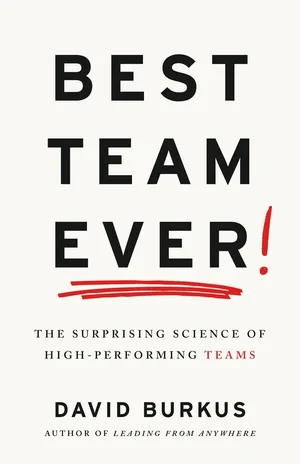
- David Burkus learned positioning the expensive way. His earlier networking book was pushed toward a career book, and in the book's entire history it brought him two speaking gigs, because companies do not hire speakers to help their staff find a new job. For his fifth book he positioned for managers and their problem: they want to lead the best team ever. That book, written with Scribe, now feeds the speaking business that is most of his income.
- Nikki Barua had the material but not the reader. Her ideas were spread across blog posts. Working through the North Star document helped her clarify her audience and goals before the writing started.
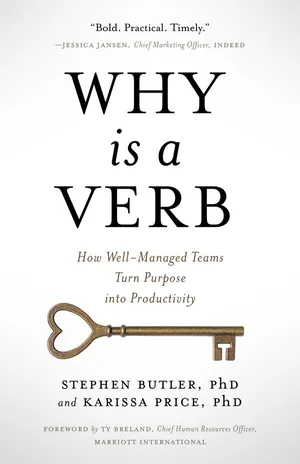
- Stephen Butler and Karissa Price told Scribe at the outset that they were not trying to sell copies; they were building a platform for an idea. Their subtitle, How Well-Managed Teams Turn Purpose into Productivity, tells a manager at a glance whether the book is for them.
Common mistakes
- Two readers joined by "and." "For executives and their teams" is two positioning statements. Pick the one who buys.
- A topic instead of a problem. "Leadership" is a shelf in a bookstore, not a problem someone has on Tuesday.
- Promising speed. "Fast results" sounds like every ad your reader has learned to ignore. Promise the change, not the clock.
- Hiding the difference in adjectives. "Proven," "unique" and "holistic" are claims, not differences. Replace each with the fact behind it.
- Writing it once and filing it. The statement only works if you use it to make decisions. Keep it where you write.
Once the statement is settled, turn it into the public sentence in the one-line promise guide, or go straight to the bio builder and use the reader and result as your first two answers.
Sources: The Scribe Method, The North Star check; The Scribe Method, Figure out your audience; author details from the linked Scribe success stories.