Say the same thing everywhere.
A brand only works when people hear the same message from every direction. This checklist goes place by place, from the back cover to the first minute of a talk, so every place you appear describes the same person.
Write down the core first
You cannot check consistency against a feeling. Before you open a single profile, put these five lines in one document. Each comes from an earlier guide.
1. Who I help: [from the positioning statement]
2. My promise: [from the one-line promise]
3. My named idea: [exact spelling and capitalization, from name your idea]
4. My talks: [two or three titles, from speaking topics]
5. My bios: [short, medium, long and first person, from the bio builder]
Plus: one primary headshot and the cover file (see the photo guide).
Lines 1 to 3 are the ones that must be identical everywhere. If you find yourself paraphrasing them, either your paraphrase is better (update the core) or it is drift (fix the place).
The place-by-place checklist
Work through every row. "Core" means the exact words from your brand core.
| Place | Check |
|---|---|
| Book cover and subtitle | Subtitle states the promise or names the reader. Named idea appears on the cover or in the first lines of the back copy. |
| Back cover copy | Opens with the reader's problem. Uses the core promise word for word somewhere. Bio is the 50 word version. |
| Amazon book page and author page | Description matches the back cover. Author page uses the 100 or 200 word bio and the primary headshot. |
| Website home page | Headline is the promise. Who you help is stated above the fold. The book cover appears with your photo. |
| Website About page | First-person bio. Same reader, same promise, same named idea. |
| LinkedIn headline | Reader plus promise, not just a job title. Mentions the book. |
| LinkedIn About and banner | First-person bio. Banner shows the book cover. Featured section links to the book and speaker page. |
| Speaker sheet and speaker page | Same talk titles as your core. 50 word introduction ready to be read aloud. Primary headshot. |
| Podcast guest kit | 50 word bio, three suggested questions that lead to your named idea, one link. |
| Event programs you have appeared in | Ask past hosts to update old bios on their sites if they are still live. |
| Email signature | Name, one line (the promise or the book), one link. No inspirational quotes. |
| Company website team page | Your bio there does not contradict the author bio. |
| Slides | Title slide uses the talk title from the core. Colors and typeface taken from the book cover. |
| The first minute of every talk | Say who you help and the promise, in the core words, before anything else. |
| Your own answer at a dinner | When someone asks "what do you do?", the first sentence out of your mouth is the core promise. |
That last row is not a joke. If the sentence you use in conversation is different from the one on your website, one of them is wrong, and it is often the website.
A worked audit
Say you are the invented nurse manager from the bio guide, whose core promise is "helping nursing leaders keep new graduate nurses through their first year," with a method called the Ten-Minute Round. An audit finds:
- LinkedIn headline: "Nurse Manager | Leader | Mentor | Runner." No reader, no promise, no book. Fix: "I help nursing leaders keep new graduate nurses through year one | Author, Through Year One."
- Website: calls the method "the weekly retention check-in." Fix: "the Ten-Minute Round," as in the book.
- Speaker page: lists six talks, including two on general leadership. Fix: cut to the signature keynote and the charge nurse workshop.
- Podcast she appeared on last year: show notes use a bio from before the book. Fix: email the host the new 50 word version.
- Hospital staff page: fine; it describes her job, and nothing contradicts the author bio.
Five changes, an afternoon of work, and every place now says the same thing.
How brands drift
Almost nobody decides to be inconsistent. Brands drift in a few predictable ways, and knowing them makes the drift easier to spot.
- The old bio that never dies. Every event, podcast and directory keeps the bio you sent them. Two years later, the internet holds five versions of you, and only one is current.
- The synonym habit. Writers are taught not to repeat words, so the method becomes "the system" in one place, "the process" in another and "my approach" in a third. In a brand, repetition is the point.
- The new offer bolted on. You add a course or a second service, and its description creeps into your headline. Now the headline promises two things.
- Someone else writes it. An assistant, an agency or an event host fills a gap with their own words. They mean well; they just do not have your brand core. Give it to them.
- The talk outgrows the book. You refine the talk on stage, and the stage version gets better than the written one. That is good drift: bring the better words back into the core.
What should change from place to place
Consistency is about the core, not about sounding like a robot. These should adapt:
- Tone. A LinkedIn post can be casual; a press bio should not be.
- Length. Use the bio length that fits the space.
- Person. Third person when someone else presents you, first person on your own pages.
- Stories and examples. Use different ones for different audiences, all pointing at the same promise.
- Proof. Lead with the credential that matters most to that audience.
Consistency in practice
Each card links to the full story. These results are strong, not typical, and nobody can promise them.


- One name, many channels. Scott A. Martin's company, podcast, framework and book all carry the name Groundswell, which his story describes as a lighthouse for his whole brand. (read his story)
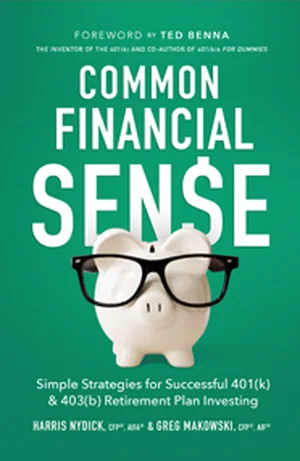
- Company name and book name as one idea. Harris Nydick's firm is CFS, which stands for Common Financial Sense, the title of his book. The premise of both is the same: anyone who cannot explain investing in plain English either does not understand it or is not being straight with you.
- One audience, everywhere. Brian Reese wrote You Deserve It for veterans, the same people his company VA Claims Insider serves, and his story reports the book has reached more than 60,000 of them.
- A brand you can be held to. Gui Costin notes in his story that once your belief system is in print, the whole organization can hold you to it. Consistency is not only for outsiders. (read his story)
- Planning the next book in the same lane. Dr. Thom LeBeau describes life as learn, earn and return, sees The Black Sheep Advantage as the start of the return, and has a companion workbook, an online course and more books on the way, all building on the same idea.
The once-a-year check
Set a date each year, perhaps the anniversary of your book's publication, and do these in order:
- Reread your brand core. Is it still true? Has your reader or your offer changed?
- Add any new, specific, checkable result to your bios. Update all lengths at once.
- Search your name in quotes and look at the first three pages of results. Note every old bio, photo and description.
- Email hosts and directories with your current 50 word bio and headshot.
- Check the photo is still recognizably you.
- Ask three clients how they describe you, and compare with line 2 of your core.
If the answers in step 6 match your core, the brand is working. If they have drifted, the clients may be telling you something better. Write it down and start again from the positioning statement.
Start with the bios
They appear in more places than anything else on this list. The bio builder writes all four versions from one set of facts.
Sources: author details from the linked Scribe success stories; method from The Scribe Method, How writing a book can build your brand.